Options
Anemonin, from Clematis crassifolia, potent and selective inducible
Type
article
Resource
Journal of Ethnopharmacology.(116):518-527.
Date Issued
2008
Author(s)
李宗徽
Lee TH; Huang NK; Lai TC; Yang ATY; Wang GJ;
Subjects
生藥學研究所
期刊論文
Abstract
The aim of this study was to examine the anti-inflammatory effects of aerial part of Clematis crassifolia Benth. (Ranunculaceae) based on an iNOS inhibition in lipopolysaccharide (LPS) activated macrophages. Bioassay-guided fractionation and purification led to the isolation of ibotanolide B (1), calceolarioside B (2), trans-caffeic acid (3), anemonin (4) and 3',4',5,7-tetrahydroxy-6-C-glucopyranosylflavone (5). Their structures were elucidated on the basis of spectroscopic analysis. All these compounds inhibited NO production, detected as nitrite, in activated macrophages except 5. Among them, anemonin (4) was the most potent. Analyses of reverse transcription-polymerase chain reaction (RT-PCR) and Western blotting revealed that it decreased the expression of iNOS mRNA and protein in activated RAW 264.7 cells. In isolated rat thoracic aortic rings, anemonin prevented the vascular hyporeactivity to phenylephrine induced by LPS whereas it did not affect acetylcholine-induced endothelial NO-dependent relaxation, an index of endothelial NOS (eNOS) activity. These results indicated that the potential anti-inflammatory effect of anemonin, the naturally occurring selective iNOS inhibitor, may provide a rationale for the medical use of Clematis crassifolia.
File(s)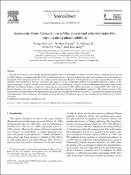
Loading...
Name
attachment.pdf
Size
689.59 KB
Format
Adobe PDF
Checksum
(MD5):d09714e4563570bee0475c264113810e
Loading...
Name
attachment2.pdf
Size
31.11 KB
Format
Adobe PDF
Checksum
(MD5):89c21ba1899977395f3653d9647a0f68