Options
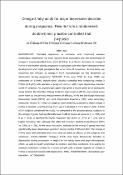
Omega-3 fatty acids for major depressive disorder during pregnancy: Results from a randomized; double-blind; placebo-controlled trial
Type
article
Resource
Journal of Clinical Psychiatry.(69):644-651.
Date Issued
2008
Author(s)
Subjects
醫務管理學系
期刊論文
Abstract
BACKGROUND: Perinatal depression is common, and treatment remains challenging. Depression has been reported to be associated with the abnormality of omega-3 polyunsaturated fatty acids (PUFAs). A profound decrease of omega-3 PUFAs in the mother during pregnancy is associated with the higher demand of fetal development and might precipitate the occurrence of depression. In this study, we examined the efficacy of omega-3 PUFA monotherapy for the treatment of depression during pregnancy.
METHOD: From June 2004 to June 2006, we conducted an 8-week, double-blind, placebo-controlled trial comparing omega-3 PUFAs (3.4 g/d) with placebo in pregnant women with major depressive disorder (DSM-IV criteria). No psychotropic agent was given 1 month prior to or during the study period. The Hamilton Rating Scale for Depression (HAM-D) was scored every other week as the primary measurement of efficacy, while the Edinburgh Postnatal Depression Scale (EPDS) and Beck Depression Inventory (BDI) were secondary measures.
RESULTS: Thirty-six subjects were randomly assigned to either omega-3 PUFAs or placebo, and 33 among them were evaluated in more than 2 visits. A total of 24 subjects completed the study. As compared to the placebo group, subjects in the omega-3 group had significantly lower HAM-D scores at weeks 6 (p = .001) and 8 (p = .019), a significantly higher response rate (62% vs. 27%, p = .03), and a higher remission rate, although the latter did not reach statistical significance (38% vs. 18%, p = .28). At the study end point, subjects in the omega-3 group also had significantly lower depressive symptom ratings on the EPDS and BDI. The omega-3 PUFAs were well tolerated and there were no adverse effects on the subjects and newborns.
CONCLUSIONS: Omega-3 PUFAs may have therapeutic benefits in depression during pregnancy. In regard to the safety issue and psychotherapeutic effect, as well as health promotion to mothers and their newborns, it is worthy to conduct replication studies in a larger sample with a broad regimen of omega-3 PUFAs in pregnant women with depression
METHOD: From June 2004 to June 2006, we conducted an 8-week, double-blind, placebo-controlled trial comparing omega-3 PUFAs (3.4 g/d) with placebo in pregnant women with major depressive disorder (DSM-IV criteria). No psychotropic agent was given 1 month prior to or during the study period. The Hamilton Rating Scale for Depression (HAM-D) was scored every other week as the primary measurement of efficacy, while the Edinburgh Postnatal Depression Scale (EPDS) and Beck Depression Inventory (BDI) were secondary measures.
RESULTS: Thirty-six subjects were randomly assigned to either omega-3 PUFAs or placebo, and 33 among them were evaluated in more than 2 visits. A total of 24 subjects completed the study. As compared to the placebo group, subjects in the omega-3 group had significantly lower HAM-D scores at weeks 6 (p = .001) and 8 (p = .019), a significantly higher response rate (62% vs. 27%, p = .03), and a higher remission rate, although the latter did not reach statistical significance (38% vs. 18%, p = .28). At the study end point, subjects in the omega-3 group also had significantly lower depressive symptom ratings on the EPDS and BDI. The omega-3 PUFAs were well tolerated and there were no adverse effects on the subjects and newborns.
CONCLUSIONS: Omega-3 PUFAs may have therapeutic benefits in depression during pregnancy. In regard to the safety issue and psychotherapeutic effect, as well as health promotion to mothers and their newborns, it is worthy to conduct replication studies in a larger sample with a broad regimen of omega-3 PUFAs in pregnant women with depression
File(s)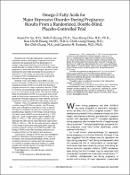
Loading...
Name
attachment.pdf
Size
233.18 KB
Format
Adobe PDF
Checksum
(MD5):1526e240e4a8a72686a9286af1102b9c
Loading...
Name
attachment2.pdf
Size
37.12 KB
Format
Adobe PDF
Checksum
(MD5):9b32ff72c8101e08ec2063441c647a80