Options
Relapse and long-acting injectable risperidone: a one-year mirror-image study with a national claims-based database in Taiwan
Type
article
Resource
Value in Health.
Date Issued
2009
Author(s)
Subjects
醫務管理學系
期刊論文
Abstract
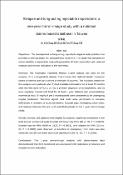
OBJECTIVES: The development of long-acting, injectable atypical antipsychotics has provided a new paradigm for schizophrenia treatment. The study was designed to assess whether a risperidone long-acting injection (RLAI) is associated with reduced relapses and service utilization in the real world.
METHODS: The Psychiatric Inpatients Medical Claims dataset was used for the analysis. It is a longitudinal dataset that includes the National Health Insurance claims of service uses by a cohort of mentally ill patients. The inclusion criteria for this analysis were patients who: 1) had available information for at least 12 months after the first dose of RLAI; 2) had a primary diagnosis of schizophrenia; and 3) were regularly treated with RLAI for at least 1 year. Patients who accumulatively received at least 75-mg RLAI per 3-month period were considered to be undergoing regular treatment. Wilcoxon signed rank tests were performed to compare differences in numbers of acute admissions, hospital days, emergency room visits, and relapses between the pre- and post-RLAI periods in this 1-year mirror-image study.
RESULTS: In total, 108 patients were eligible for analysis. Significant reductions in the total annual numbers of acute hospital admissions by 55% (80 vs. 36, P = 0.0003), hospital days by 48% (4106 vs. 2126, P = 0.0021), and relapses by 54% (115 vs. 53, P = 0.0005) were observed. A reduction of emergency room visits was also observed, but did not reach statistical significance (55 vs. 25, P = 0.1255).
CONCLUSIONS: This 1-year mirror-image analysis with claims-based data demonstrated that RLAI treatment was associated with reductions in relapses and hospital service utilization.
METHODS: The Psychiatric Inpatients Medical Claims dataset was used for the analysis. It is a longitudinal dataset that includes the National Health Insurance claims of service uses by a cohort of mentally ill patients. The inclusion criteria for this analysis were patients who: 1) had available information for at least 12 months after the first dose of RLAI; 2) had a primary diagnosis of schizophrenia; and 3) were regularly treated with RLAI for at least 1 year. Patients who accumulatively received at least 75-mg RLAI per 3-month period were considered to be undergoing regular treatment. Wilcoxon signed rank tests were performed to compare differences in numbers of acute admissions, hospital days, emergency room visits, and relapses between the pre- and post-RLAI periods in this 1-year mirror-image study.
RESULTS: In total, 108 patients were eligible for analysis. Significant reductions in the total annual numbers of acute hospital admissions by 55% (80 vs. 36, P = 0.0003), hospital days by 48% (4106 vs. 2126, P = 0.0021), and relapses by 54% (115 vs. 53, P = 0.0005) were observed. A reduction of emergency room visits was also observed, but did not reach statistical significance (55 vs. 25, P = 0.1255).
CONCLUSIONS: This 1-year mirror-image analysis with claims-based data demonstrated that RLAI treatment was associated with reductions in relapses and hospital service utilization.
File(s)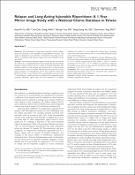
Loading...
Name
attachment.pdf
Size
71.3 KB
Format
Adobe PDF
Checksum
(MD5):d6d8aa73b2dbc424cbb1cee8a1e6e7f9
Loading...
Name
attachment2.pdf
Size
35.8 KB
Format
Adobe PDF
Checksum
(MD5):de5bd47c9f7790ed13d6e70b61e24d8c