Options
Antioxidant effects of chromium supplementation with type 2 diabetes mellitus and euglycemic subjects
Type
article
Resource
J. Agric. Food Chem.(52):1385-1389.
Date Issued
2004
Author(s)
Cheng HH; Lai MH; Hou WC; Huang CL
Subjects
生藥學研究所
期刊論文
Abstract
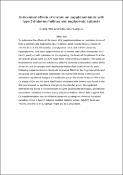
To determine the effects of chromium (Cr) supplementations on oxidative stress of type 2 diabetes and euglycemic (EU) subjects, adult having HbA(1C) values of <6.0% (EU), 6.8-8.5% (mildly hyperglycemic, MH), and >8.5% (severely hyperglycemic, SH) were supplemented for 6 months with 1000 microg/day of Cr (as Cr yeast) or with a placebo. In the beginning, the levels of the plasma Cr in the MH and SH groups were 25-30% lower than those of the EU subjects. The values of thiobarbituric acid reactive substances (TBARS) and total antioxidative status (TAS) of the MH and SH groups were significantly higher than those of the EU ones. Following supplementations, the levels of plasma TBARS in the Cr groups of MH and SH groups were significantly decreased (the inverse was found in the EU) and showed no significant changes in the placebo group. The levels of plasma TAS in the Cr groups of EU and MH were significantly decreased (the inverse was found in the SH) and showed no significant changes in the placebo group. No significant difference was found in the antioxidant enzyme (superoxide dismutase, glutathione peroxidase, catalase) activities during supplementations. These data suggest that Cr supplementation was an effective treatment strategy to minimize increased oxidative stress in type 2 diabetes mellitus patients whose HbA(1C) level was >8.5%, and the Cr in EU groups might act as a prooxidant.
File(s)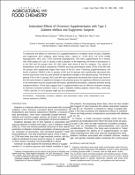
Loading...
Name
attachment.pdf
Size
41.05 KB
Format
Adobe PDF
Checksum
(MD5):ae56fd3bfbfeee743c66c40a793f0d9e
Loading...
Name
attachment2.pdf
Size
30.8 KB
Format
Adobe PDF
Checksum
(MD5):4b9952f04e36e90a43c06dfc802fcd38