Options
Magnolol stimulates lipolysis in lipid-laden RAW 264.7 macrophages
Type
article
Resource
Journal of Cellular Biochemistry.(94):1028-1037.
Date Issued
2005
Author(s)
陳金山
Chen JS; Chen YL; Greenberg AS; Chen YJ; Wang SM;
Subjects
學科:解剖學暨細胞生物學科
期刊論文
Abstract
This study investigated the effect of magnolol, a compound isolated from Magnolia officinalis, on lipolysis in lipid-laden RAW 264.7 macrophages. Treatment of macrophages with magnolol led to dissolution of lipid droplets. This phenomenon was accompanied by a dose-dependent release of glycerol and cholesterol and a concomitant reduction in intracellular levels of glycerol and cholesterol. Furthermore, adipose differentiation-related protein (ADRP), a lipid droplet-associated protein, was down-regulated by magnolol in a dose- and time-dependent manner by Western blot analysis. Immunofluorescence studies also showed that ADRP became detached from the surface of lipid droplets after magnolol treatment. The lipolytic effect of magnolol was not mediated through the cAMP-protein kinase A (PKA) system, an authentic lipolytic pathway for macrophages, since magnolol did not induce an increase of intracellular cAMP levels, and pretreatment with either of PKA inhibitors, PKI and KT5720, did not abrogate the lipolytic response to magnolol. We conclude that magnolol induce-lipolysis of lipid-laden macrophages by down-regulation of ADRP expression and detachment of ADRP from the lipid droplet surface by a cAMP-independent mechanism. Lipolysis of lipid-laden macrophages may occur when the amount of ADRP on the surface of lipid droplets is not enough to stabilize the lipid droplets.
File(s)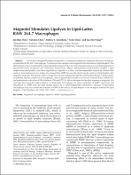
Loading...
Name
attachment.pdf
Size
306.55 KB
Format
Adobe PDF
Checksum
(MD5):94d303515b3fcf74e1eb64a4c8c19de1
Loading...
Name
attachment2.pdf
Size
35.4 KB
Format
Adobe PDF
Checksum
(MD5):cc8aadcd5fa1019d9efe4c4171fb21fa