Options
Seasonality in Pediatric Asthma Admissions: Role of Climate and Environmental Factors
Type
article
Resource
European Journal of Pediatrics.(165):747-752.
Date Issued
2006
Author(s)
Subjects
醫務管理學系
期刊論文
Abstract
BACKGROUND: Population-based data from Taiwan are used to examine seasonality in pediatric asthma admissions (proxy for asthma exacerbations) and associations with air pollutants and climatic factors. Monthly admission rates per 100,000 population, classified into three age groups, 0 approximately 2, 2 approximately 5, and 6 approximately 14 years (calculated from a total of 27,275 hospitalizations during 1998-2001) were subjected to autoregressive integrated moving average (ARIMA) modeling to examine seasonality. Spearman rank correlations were used to examine associations with criterion air pollutants (PM(10), SO(2), CO, O(3), NO(2)) and meteorological factors (ambient temperature, relative humidity, atmospheric pressure, rainfall, and sunshine hours).
RESULTS: Both seasonality and associations with air pollutants and climate factors vary by age group. Among under-twos, the rates are lowest in January-February and highest in November, with a trough in June-July. Among preschoolers, the rates are lowest in June-July and highest in November, with two upsurges in August and March. Among school-goers, admission rates are lowest during June-August, with upsurges in March and September. The number of weather and pollutant predictors increases with age. Among under-twos, only two factors, PM(10) and rainfall, significantly predict admissions. For preschoolers, five factors (PM(10), CO, O(3), temperature, and pressure), and for school-goers, all air pollutants except NO(2,) and all climatic factors except rainfall are significant.
CONCLUSION: Seasonality in pediatric asthma admissions vary by age in a subtropical island setting.
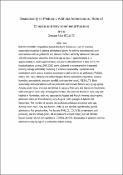
RESULTS: Both seasonality and associations with air pollutants and climate factors vary by age group. Among under-twos, the rates are lowest in January-February and highest in November, with a trough in June-July. Among preschoolers, the rates are lowest in June-July and highest in November, with two upsurges in August and March. Among school-goers, admission rates are lowest during June-August, with upsurges in March and September. The number of weather and pollutant predictors increases with age. Among under-twos, only two factors, PM(10) and rainfall, significantly predict admissions. For preschoolers, five factors (PM(10), CO, O(3), temperature, and pressure), and for school-goers, all air pollutants except NO(2,) and all climatic factors except rainfall are significant.
CONCLUSION: Seasonality in pediatric asthma admissions vary by age in a subtropical island setting.
File(s)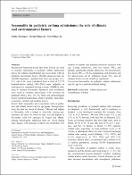
Loading...
Name
attachment.pdf
Size
158.67 KB
Format
Adobe PDF
Checksum
(MD5):c7f883a8e3fa40d9bc9fcd5fae475191
Loading...
Name
attachment2.pdf
Size
34.1 KB
Format
Adobe PDF
Checksum
(MD5):e600e01f02255d1b98d81358adc9f7ea