Options
The protective effect of prostacyclin on adriamycin-induced apoptosis in rat renal tubular cells
Type
article
Resource
Eur J Pharmacol.(4):8-15.
Date Issued
2006
Author(s)
陳作孝; 蘇裕謀; 陳正憲; 許永和
Chen CH; Lin H; Hsu YH; Sue YM; Cheng TH; Chan P; Chen TH
Subjects
內科學科
Abstract
Adriamycin-induced nephrosis in rats is a commonly used experimental model for pharmacological studies of human chronic renal diseases. Adriamycin-induced apoptosis of renal tubular cells has been reported in adriamycin-treated rats. In addition, prostacyclin (PGI(2)) is known to have various protective effects on many kinds of cells. To investigate the protective effect of PGI(2) on cells undergoing adriamycin-induced apoptosis, this study selectively augmented PGI(2) production via adenovirus-mediated transfer of genes for cyclooxygenase-1 (COX-1) and prostacyclin synthase (PGIS) (two key enzymes of PGI(2) synthesis) to renal tubular cells. This PGI(2) overexpression protected rat renal tubular cells from adriamycin-induced apoptosis. Ad-COX-1/PGIS transfection was found to reduce the adriamycin-stimulated activities of caspase-3 and caspase-9, inhibit adriamycin-induced release of cytochrome c, elevate the expression of Bcl-x(L), and suppress the activation and translocation of nuclear factor-kappaB (NF-kappaB) in adriamycin-treated renal tubular cells. Our results reveal that selective augmentation of PGI(2) production can protect rat renal tubular cells from adriamycin-induced apoptosis via the NF-kappaB signaling pathway. This implies the therapeutic potential of combined COX-1 and PGIS gene transfer in gene therapy for chronic renal diseases.
File(s)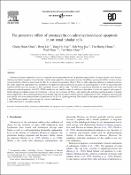
Loading...
Name
attachment.pdf
Size
355.5 KB
Format
Adobe PDF
Checksum
(MD5):785b216769796f3b25bc7497cc8c3021
Loading...
Name
attachment2.pdf
Size
75.53 KB
Format
Adobe PDF
Checksum
(MD5):60a22e47922ce7d89b1b62c7acec3c62