Options
Evaluation of optimal cerebral perfusion pressure in severe traumatic brain injury.
Type
article
Resource
Acta Neurochir Suppl.(101):131-136.
Date Issued
2008
Author(s)
李良明
JW Lin; JT Tsai; CM lin; LM Lee; KS Hung; SJ Huang; SH Hsiao; WY Chung; MD Tsai; CC Hsia.; CC Hung; WT Chiu*
Subjects
學科:泌尿學科
期刊論文
Abstract
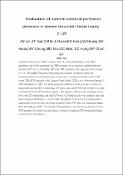
Traumatic brain injury (TBI) is a major cause of death and disability. In the 2000 guidelines, one of the suggestions for TBI treatment was to maintain cerebral perfusion pressure (CPP) < or = 70 mmHg. But in the 2003 guidelines, the suggestion was changed to < or = 60 mmHg. There have been some discrepancies of opinions about this recommendation in recent publications. In this study, we retrospectively reviewed 305 severe TBI (STBI) patients with Glasgow Coma Scales (GCS) < or = 8 between January 1, 2002 and March 31, 2003. The study group was stratified according to use or nonuse of intracranial pressure (ICP) monitoring, ICP levels, ages, and GCS levels in order to test the correlation between CCP and the prognosis. The patients < 50-year-old, with higher GCS level, with ICP monitoring, and with ICP levels < 20 mmHg had lower mortality rates and better prognosis (GOS) (p < 0.05 or 0.001). The patients in the GCS 3-5 subgroup had a significantly lower mortality and better prognosis if the CPP value was maintained higher than 70 mmHg (p < 0.05) The optimal CPP maintained < or = 60 mmHg did not fit in all STBI patients. Our study concludes that it is critical to maintain CPP substantially higher in lower GCS level patients.
File(s)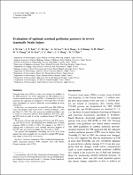
Loading...
Name
attachment.pdf
Size
397.19 KB
Format
Adobe PDF
Checksum
(MD5):766f6b2c177e65baa73268355e05170e
Loading...
Name
attachment2.pdf
Size
37.8 KB
Format
Adobe PDF
Checksum
(MD5):0a1c34abe9139457d4ac11f9107ee646