Options
Cosmetic applications of selected traditional Chinese herbal medicines
Type
article
Resource
Journal of Ethnopharmacology.(106):353-359.
Date Issued
2006
Author(s)
王國憲
Wang KH; Lin RD; Hsu FL; Huang YH; Chang HC; Huang CY; Lee MH
Subjects
學科:皮膚學科
期刊論文
Abstract
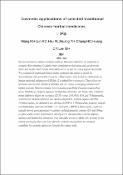
Because tyrosinase catalyzes melanin synthesis, tyrosinase inhibitors are important in cosmetic skin-whitening. Oxidative stress contributes to skin aging and can adversely affect skin health, which means antioxidants active in skin cells may support skin health. We examined 25 traditional Chinese herbal medicines that might be useful for skin-whitening and skin health. Extracts (100microg/mL) were tested for cytotoxicity on human epidermal melanocytes (HEMn); 12 exhibited low cytotoxicity. Their effects on tyrosinase and melanin inhibitory activities and free radical scavenging activities were further assessed. Phenolic contents were evaluated using Folin-Ciocalteu reagent. Four herbs, Pharbitis nil, Sophora japonica, Spatholobus suberectus, and Morus alba, exhibited potent inhibitory effects on tyrosinase (IC(50) values 24.9, 95.6, 83.9, and 78.3microg/mL, respectively). Melanin inhibition was not dose-dependent. Sophora japonica (IC(50): 14.46microg/mL, 1,1-diphenyl-2-picrylhydrazyl (DPPH); 1.95microg/mL, hydroxyl radical) and Spatholobus suberectus (IC(50): 10.51microg/mL, DPPH; 4.36microg/mL, hydroxyl radical) showed good antioxidative activities and high phenolic contents (255 and 189mg of gallic acid/g extract, respectively). Among active anti-tyrosinase extracts, Sophora japonica and Spatholobus suberectus were especially potent in HEMn cells in terms of free radical scavenging effects and high phenolic contents, making them the strongest candidates for cosmetic application found in the current study
File(s)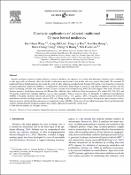
Loading...
Name
attachment.pdf
Size
190.64 KB
Format
Adobe PDF
Checksum
(MD5):721afd68bd368956787b539393cd80a3
Loading...
Name
attachment2.pdf
Size
38.54 KB
Format
Adobe PDF
Checksum
(MD5):b0090cbab7e59242ebd49e86fad039fb